
Understanding Leukemia Treatment
Leukemia treatment is a journey that typically unfolds in phases. Understanding these phases—and the various treatment options within them—helps you know what to expect and empowers you to participate in decisions about your care.
📋 Treatment Phases
Most leukemia treatment follows a structured approach with distinct phases. Each phase has specific goals and different intensity levels.
1Induction
The first and most intensive phase. The goal is to achieve remission—clearing the blood and bone marrow of visible leukemia cells (blasts) so normal blood production can resume. This typically requires a hospital stay of 4-6 weeks.
2Consolidation
After achieving remission, consolidation therapy aims to eliminate any remaining hidden leukemia cells. This may involve additional chemotherapy cycles or a .
3Maintenance (Some Leukemias)
For certain leukemias (especially ALL and APL), a lower-intensity maintenance phase follows, lasting months to years. The goal is to prevent relapse with oral medications taken at home.
4Salvage / Relapse Therapy
If leukemia returns (relapses) or doesn't respond to initial treatment (refractory), salvage regimens use different drug combinations. This may include clinical trials or advanced therapies like CAR-T.
💉 Induction Regimens
The "7+3" Standard
For many years, the standard treatment for Acute Myeloid Leukemia (AML) has been the "7+3" regimen. It is called 7+3 because it involves two types of chemotherapy:
- Cytarabine (Ara-C): Given continuously for 7 days via IV infusion.
- Daunorubicin or Idarubicin: Given as a quick infusion on days 1, 2, and 3.
What to Expect: You'll be hospitalized for about 4-6 weeks. The first week involves receiving the chemotherapy, followed by several weeks of recovery as your bone marrow regenerates healthy cells.
HMA + Venetoclax
For patients who may not tolerate intensive chemotherapy (often older adults or those with other health conditions), the combination of a Hypomethylating Agent (HMA) and Venetoclax has become a standard of care.
HMA (Azacitidine/Decitabine)
Works by "turning back on" genes that help blood cells mature normally. Given by injection.
Venetoclax (Venclexta)
A "BCL-2 inhibitor" oral pill that helps trigger natural cell death in leukemia cells.
Vyxeos (CPX-351)
CPX-351 (Vyxeos) is a specialized liposomal formulation combining Cytarabine and Daunorubicin in a fixed ratio. It's specifically approved for patients with newly diagnosed therapy-related AML (t-AML) or AML with myelodysplasia-related changes.
🔥 FLAG-IDA Regimen
FLAG-IDA is an intensive chemotherapy regimen often used for relapsed or refractory AML, though sometimes it's used as a frontline option for high-risk patients.
What FLAG-IDA Stands For:
- F = Fludarabine – A chemotherapy drug that makes leukemia cells more sensitive to other drugs
- L = Part of the regimen name (used with Ara-C)
- A = High-dose Cytarabine (Ara-C) – Attacks rapidly dividing cells
- G = G-CSF (Filgrastim) – Helps white blood cells recover faster
- IDA = Idarubicin – An anthracycline chemotherapy drug
What to Expect: FLAG-IDA is an intensive inpatient regimen requiring a hospital stay of 4-6 weeks. Blood counts will drop significantly before recovering. Your team will monitor you closely for infections and provide supportive care.
🎯 Targeted Therapy Regimens
If your leukemia has specific genetic mutations, your doctor may add a targeted drug to your regimen. These drugs are designed to attack the unique vulnerabilities in your cancer cells.
FLT3-Mutated AML
Regimen: 7+3 plus Midostaurin (Rydapt) during induction and consolidation. For relapsed cases, Gilteritinib (Xospata) may be used alone.
IDH1 or IDH2-Mutated AML
Regimen: Targeted inhibitors like Ivosidenib (IDH1) or Enasidenib (IDH2) can be given with HMA or as single agents.
Menin Inhibitors (Emerging)
NPM1-mutated or KMT2A-rearranged leukemias may benefit from newer menin inhibitor drugs like Revumenib, often available through clinical trials.
🧬 CAR-T Cell Therapy
CAR-T (Chimeric Antigen Receptor T-cell) therapy is a groundbreaking form of immunotherapy that reprograms your own immune cells to fight cancer. Unlike chemotherapy, which broadly attacks dividing cells, CAR-T creates a living drug — your own T-cells are engineered to recognize and destroy cancer cells with precision.
⏱️ Timeline: The entire CAR-T process — from collection to infusion — typically takes 3 to 6 weeks. During the manufacturing period, you may receive "bridging therapy" (short-course chemotherapy or other treatments) to keep the leukemia under control.
How It Works — Step by Step
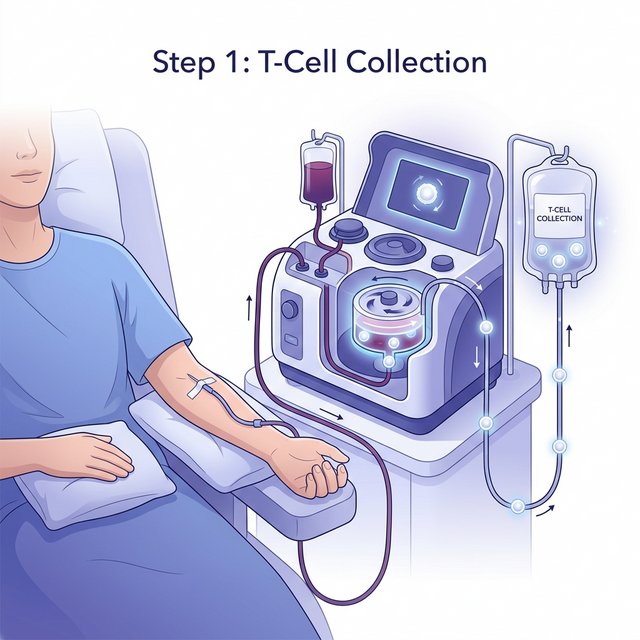
T-Cell Collection (Leukapheresis)
The process begins with leukapheresis, a procedure similar to a blood donation. Blood is drawn from one arm, passed through a machine called an apheresis device that separates out your white blood cells — specifically T-cells — and returns the remaining blood through the other arm. The session typically takes 3-6 hours.
💡 You'll be awake and comfortable during the procedure. An IV line is placed in each arm.
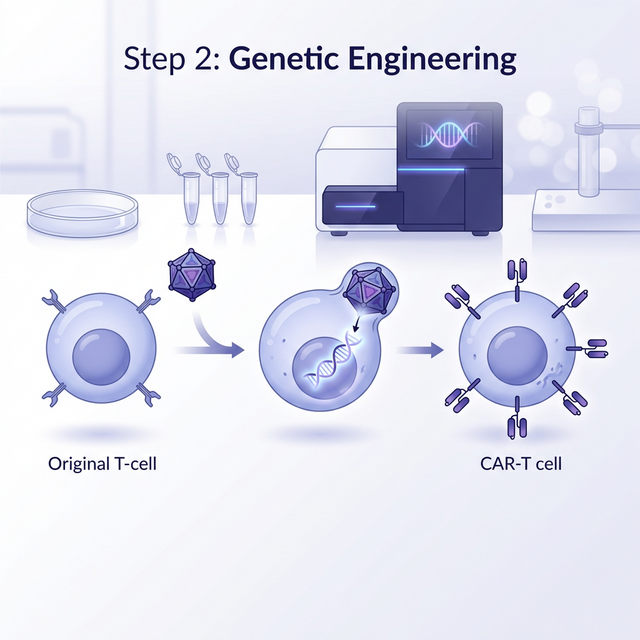
Genetic Engineering
Your collected T-cells are sent to a specialized laboratory. Using a harmless viral vector (a deactivated virus), scientists insert a new gene into the T-cells. This gene codes for the Chimeric Antigen Receptor (CAR) — a synthetic protein that will appear on the surface of the cell and acts like a "homing beacon," allowing the T-cell to recognize a specific target on cancer cells (such as the CD19 protein on B-cell leukemias).
🔬 This engineering happens at specialized manufacturing facilities and is unique to each patient.
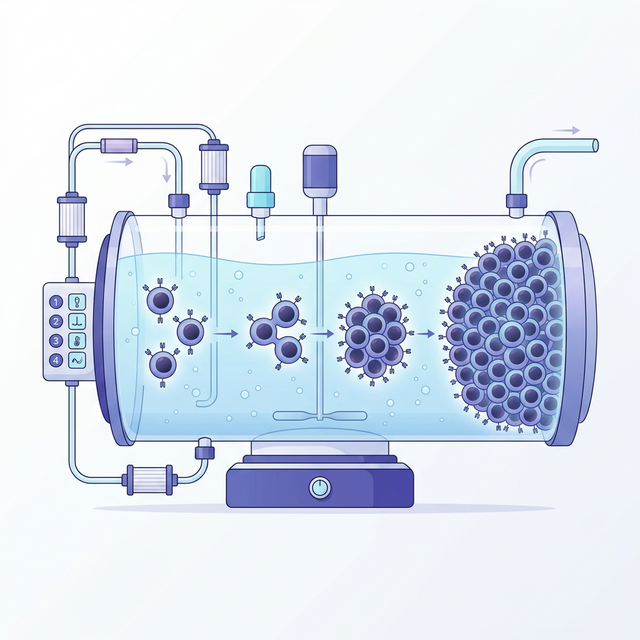
Cell Expansion
Once engineered, the CAR-T cells are placed in a bioreactor — an incubator-like device that provides the perfect conditions for cells to grow. Over 2-4 weeks, a handful of modified cells multiply into hundreds of millions of cancer-fighting CAR-T cells. Rigorous quality checks ensure the cells are healthy, potent, and safe before they are shipped back to your treatment center.
📦 The finished cells are cryopreserved (frozen) and shipped to your hospital in a special container.
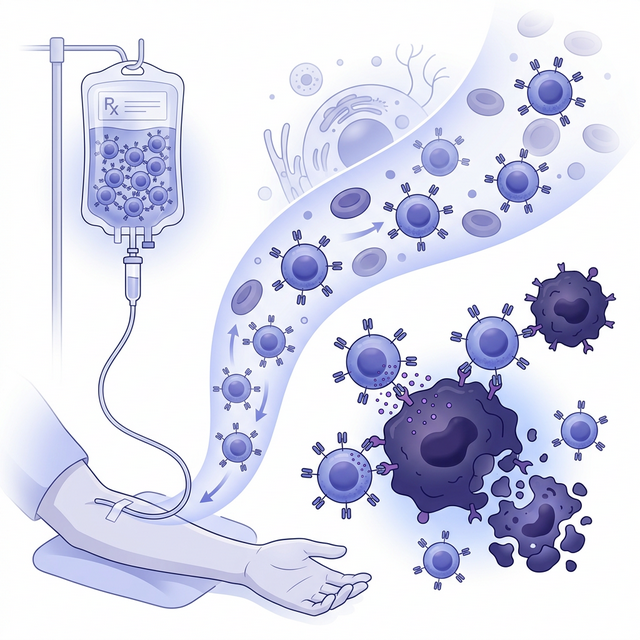
Infusion & Cancer Attack
Before infusion, you'll receive a short course of lymphodepleting chemotherapy (usually Fludarabine and Cyclophosphamide for 3 days) to suppress your existing immune cells and create "room" for the CAR-T cells. Then, the CAR-T cells are infused through an IV — similar to a blood transfusion. Once inside your body, the CAR-T cells seek out, bind to, and destroy cancer cells carrying the target protein. They continue to multiply and patrol for cancer long after the infusion.
🏥 You'll be monitored closely in the hospital for at least 7-14 days after infusion.
🔄 After Infusion: Monitoring & Response
After the infusion, your medical team will monitor you for 30-90 days near the treatment center. Blood tests and bone marrow biopsies will track the CAR-T cells and measure your response. Many patients achieve complete remission within the first month. The CAR-T cells can persist in your body for months to years, providing ongoing surveillance against cancer.
Current Approvals & Research
CAR-T therapy is currently FDA-approved for certain types of B-cell Acute Lymphoblastic Leukemia (ALL)that has relapsed or not responded to other treatments. Products include:
Kymriah
tisagenlecleucel — for B-cell ALL in patients up to age 25
Tecartus
brexucabtagene autoleucel — for relapsed/refractory B-cell ALL in adults
Yescarta
axicabtagene ciloleucel — for large B-cell lymphoma
For AML, CAR-T research is active but still primarily in clinical trials. Promising targets include CD33 and CD123. If your doctor recommends exploring CAR-T, check our for guidance.
⚠️ Possible Side Effects
CAR-T therapy can cause significant side effects that require specialized monitoring:
- Cytokine Release Syndrome (CRS) – Flu-like symptoms, fever, low blood pressure. Usually appears 1-14 days after infusion. Treated with tocilizumab and/or corticosteroids.
- Neurological Effects (ICANS) – Confusion, difficulty speaking, or headaches. Usually temporary and resolves within days to weeks.
- B-Cell Aplasia – Because CD19-targeted CAR-T also destroys healthy B-cells, you may need ongoing immunoglobulin (IVIG) infusions.
- Prolonged Cytopenias – Low blood counts may persist for weeks. Transfusion support may be needed.
CAR-T is administered at specialized certified centers (FACT-accredited) with teams trained to manage these effects. Always discuss the risk-benefit profile with your care team.
🏥 Supportive Care & Ancillary Treatments
Beyond the direct anti-leukemia drugs, you'll receive many supportive treatments to help your body through therapy and prevent complications. These are just as important as the chemotherapy itself.
🩸 Blood Transfusions
Red blood cells to treat anemia and platelets to prevent bleeding. You may need transfusions weekly or more often during treatment.
💊 Antibiotics & Antifungals
Given preventively (prophylaxis) or to treat infections when your white blood cell count is low. Examples: Levofloxacin, Fluconazole, Posaconazole.
📈 Growth Factors
G-CSF (Neupogen/Neulasta) helps your bone marrow produce white blood cells faster. Some patients also receive EPO for red blood cell production.
🤢 Anti-Nausea Medications
Modern anti-emetics like Ondansetron (Zofran) and Prochlorperazineare very effective. You'll typically receive them before and after chemotherapy.
😌 Pain Management
If you experience pain (mouth sores, bone pain, headaches), your team has many options from acetaminophen to stronger medications. Always communicate your pain levels.
🍎 Nutrition Support
A dietitian may work with you. If eating becomes difficult, TPN (Total Parenteral Nutrition)delivers nutrition directly through your IV.
⚗️ Tumor Lysis Syndrome (TLS) Prevention
When leukemia cells die quickly, they release substances that can harm kidneys. You'll receive Allopurinol or Rasburicase along with IV fluids to prevent this complication. Blood tests will monitor your kidney function closely.
🎗️ Lymphoma Treatment Regimens
Lymphoma treatment varies significantly by subtype. Below are the most important regimen families used across Hodgkin and Non-Hodgkin lymphomas.
R-CHOP — Standard NHL Backbone
Rituximab + Cyclophosphamide, Doxorubicin, Vincristine, Prednisone. The foundation of B-cell NHL therapy for over 20 years. Typically 6 cycles every 21 days. Achieves durable remission in ~60–70% of DLBCL patients. Pola-R-CHP (substituting polatuzumab vedotin for vincristine) is now preferred for intermediate/high-risk DLBCL.
ABVD / BV-AVD — Hodgkin Lymphoma
ABVD: Adriamycin (doxorubicin), Bleomycin, Vinblastine, Dacarbazine — the global standard for >40 years. BV-AVD: Brentuximab vedotin (anti-CD30 ADC) replaces bleomycin, improving outcomes in advanced-stage HL while eliminating bleomycin pulmonary toxicity. Now preferred for Stage III/IV HL per ECHELON-1 trial data.
Bendamustine-Rituximab (BR) — Indolent NHL & MCL
A gentler but highly effective combination for follicular lymphoma, marginal zone lymphoma, and mantle cell lymphoma. Superior PFS vs R-CHOP for indolent NHL (BRIGHT/StiL trials) with less alopecia, neuropathy, and myelosuppression.
CAR T-Cell Therapy for Lymphoma
Three CD19-targeted CAR T products are FDA-approved for lymphoma: Axicabtagene ciloleucel (axi-cel) for DLBCL, FL (3rd line+), and MCL; Lisocabtagene maraleucel (liso-cel) for DLBCL (2nd line+); Tisagenlecleucel (tisa-cel) for DLBCL and FL. Axi-cel and liso-cel are now approved as second-line therapy for primary refractory/early relapse DLBCL.
Bispecific Antibodies (BsAbs) — Relapsed Lymphoma
A rapidly growing off-the-shelf class that simultaneously engages CD20 on tumor cells and CD3 on T-cells. FDA-approved products include: Glofitamab (Columvi) — CD20×CD3, fixed 12-cycle duration, for DLBCL; Epcoritamab (Epkinly) — CD20×CD3, subcutaneous injection, for DLBCL/FL; Mosunetuzumab — CD20×CD3, for follicular lymphoma.