
What Are Mutations?
You may hear your medical team talk about "mutations" in your blood cells. Understanding what these are can help you participate in treatment decisions.
Mutations Explained Simply
A mutation is a change in the DNA instructions inside a cell. Think of DNA as a recipe book—mutations are like typos or missing pages that can change how the recipe turns out.
In blood cancers, certain mutations cause cells to grow and divide when they shouldn't, or prevent them from dying when they should.
How DNA Mutations Occur
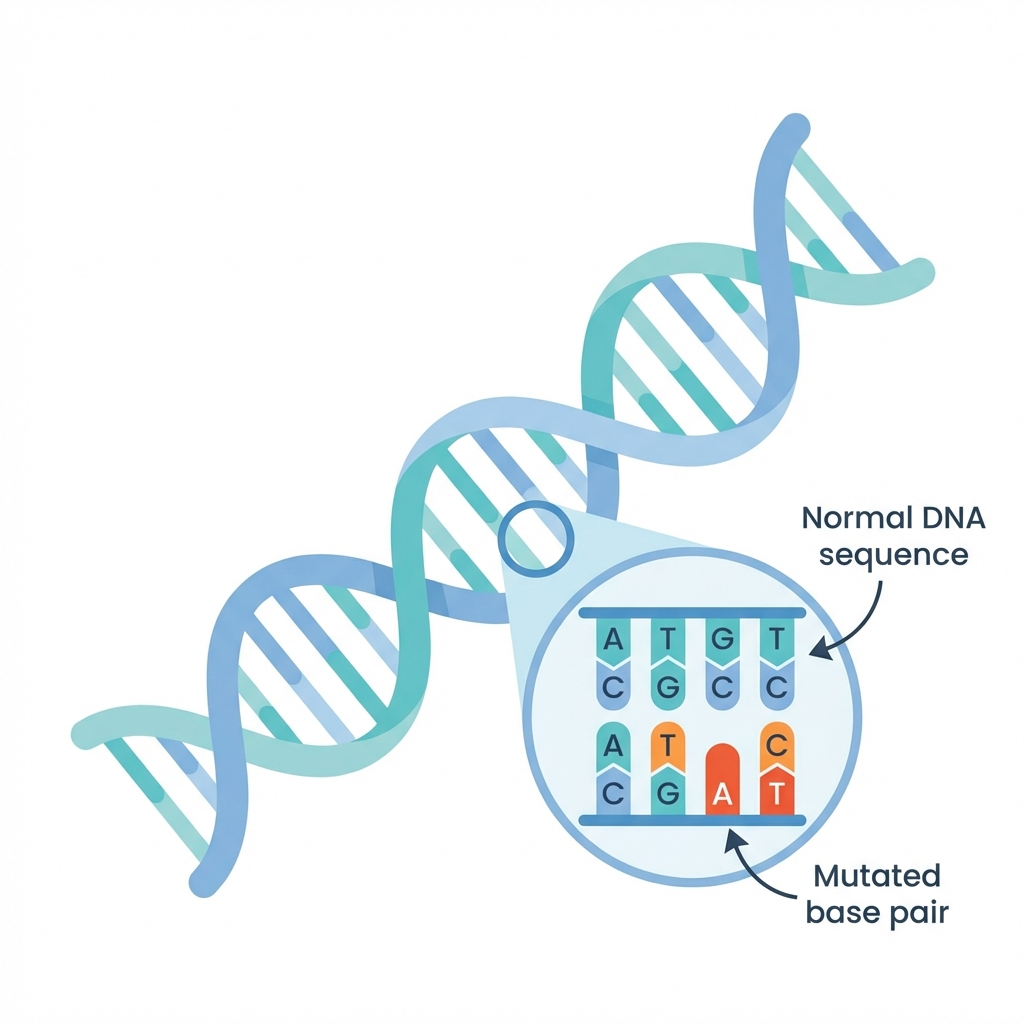
A mutation is a change in the DNA sequence. Even a single base pair change (like G→T) can alter how a gene functions, potentially leading to abnormal cell behavior.
Why Testing for Mutations Matters
Your doctor will likely test your blood or bone marrow for specific mutations. This is important because:
- Targeted treatments: Some drugs work specifically against certain mutations (like FLT3 inhibitors for FLT3 mutations)
- Predict outcomes: Some mutations are associated with better or worse prognosis
- Guide therapy intensity: Mutation status may influence whether a stem cell transplant is recommended
Common Mutations You May Hear About
NPM1
Often associated with favorable outcomes in AML, especially without FLT3-ITD.
FLT3
Common in AML. Targeted therapies are available (midostaurin, gilteritinib).
TP53
Associated with more challenging disease. Research for new treatments is ongoing.
IDH1/IDH2
Targetable with specific inhibitors (ivosidenib, enasidenib).
CEBPA
Biallelic CEBPA mutations are typically associated with favorable outcomes.
DNMT3A
One of the most common AML mutations. Often found with NPM1 and FLT3.
RUNX1
May indicate intermediate or adverse risk depending on other findings.
ASXL1
Often associated with adverse outcomes and resistance to some therapies.
Driver vs. Passenger Mutations
Not all mutations are equally important. Your report may include many genetic changes, but they fall into two categories:
🚗 Driver Mutations
These mutations actively cause and maintain the cancer. They're the main targets for treatment decisions. Examples: FLT3, NPM1, IDH1/2.
🧳 Passenger Mutations
These mutations happened along the way but don't drive the cancer. They're less important for treatment but may be monitored.
Translate Your Report Into Action
Our interactive Mutation Explorer explains how your specific combination of findings impacts your individual diagnosis and risk.
- ✓ Grounded in WHO 2022 & ELN 2022 standards
- ✓ Automated clinical trial matching
Reading Your Mutation Report
Genetic testing reports can be intimidating. Here's what to look for:
- ✓Gene name (e.g., FLT3, NPM1): The specific gene affected
- ✓Variant type (e.g., ITD, TKD, point mutation): How the gene is changed
- ✓Allelic ratio or VAF: How much of the leukemia carries this mutation
- ✓Clinical significance: Whether it impacts prognosis or treatment
💡 Ask Your Doctor
Don't hesitate to ask your care team to walk through your mutation report with you. Good questions include: "Which mutations are most important for my treatment?" and "Are there any targeted therapies for my mutations?"
📚 Learn More
Blood Cancer United provides detailed information about genetic testing and mutations in blood cancers.
AML Diagnosis and Testing at Blood Cancer United