
Leukemia Medications
Leukemia therapy has evolved from general chemotherapy to highly specific "targeted" medications that attack the unique biology of cancer cells.
🔬 Medication Classes
Leukemia drugs generally fall into four main categories. Each works through a fundamentally different mechanism. Understanding how your medication works can help you feel more informed and engaged in your treatment plan.
Cytotoxic Chemotherapy
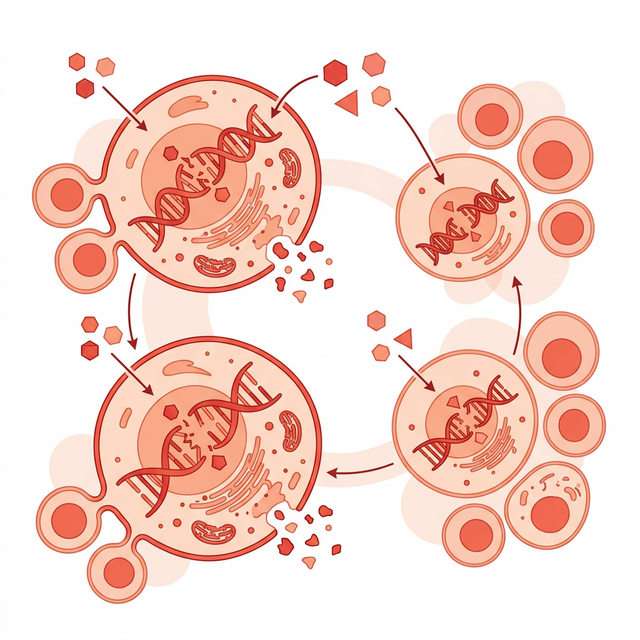
The oldest and most established class of anti-cancer drugs. Cytotoxic chemotherapy works by disrupting DNA replication — the process cells use to copy their genetic material before dividing. Because leukemia cells divide much faster than most normal cells, they are more vulnerable to these drugs. However, chemotherapy also affects other fast-dividing healthy cells (hair, gut lining, bone marrow), which causes many of the well-known side effects.
How It Works
These drugs interfere with DNA synthesis, damage the DNA double helix, or block enzymes needed for cell division. The result: cancer cells cannot replicate and undergo programmed cell death (apoptosis).
Key Drugs in This Class
Cytarabine (Ara-C)
A nucleoside analog that tricks cancer cells during DNA synthesis. The backbone of the 7+3 regimen for AML.
Daunorubicin / Idarubicin
Anthracycline antibiotics that intercalate into DNA and inhibit topoisomerase II, preventing DNA unwinding.
Fludarabine
A purine analog used in CLL and as part of FLAG-IDA or transplant conditioning regimens.
Common Side Effects: Nausea, hair loss, mouth sores, low blood counts (neutropenia, anemia, thrombocytopenia), increased infection risk, fatigue. Most side effects are temporary and resolve after treatment ends.
Targeted Therapy
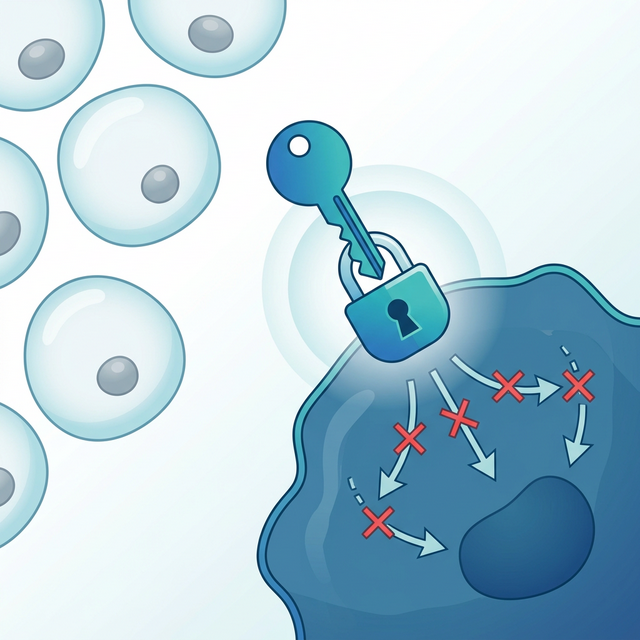
A revolution in cancer treatment. Targeted therapies are designed to block specific proteins or pathways that cancer cells depend on to grow and survive. Unlike chemotherapy, they largely spare normal cells, resulting in fewer side effects. However, they only work if your leukemia cells carry the specific molecular target — this is why genetic/molecular profiling at diagnosis is so critical.
How It Works
Think of a targeted drug as a key designed for one specific lock. It binds to a mutant protein on or inside the cancer cell, blocking the signals that tell the cell to divide or survive. Normal cells that don't have this mutation are mostly unaffected.
Key Drugs in This Class
Venetoclax (Venclexta)
A BCL-2 inhibitor. BCL-2 is a protein that helps cancer cells avoid death. Venetoclax removes this protection, triggering apoptosis. Used in AML (with HMA) and CLL.
Midostaurin (Rydapt) / Gilteritinib (Xospata)
FLT3 inhibitors. The FLT3 mutation drives aggressive cell growth — these drugs block the mutant FLT3 signal. Midostaurin for newly diagnosed; Gilteritinib for relapsed AML.
Ivosidenib / Enasidenib
IDH1/IDH2 inhibitors. These mutations block cell maturation. The inhibitors restore normal cell differentiation, allowing immature blasts to mature into functional cells.
TKIs (Imatinib, Dasatinib, Ponatinib)
Tyrosine Kinase Inhibitors for CML. They block the BCR-ABL fusion protein created by the Philadelphia chromosome — transforming CML from fatal to a manageable chronic condition.
Why Molecular Testing Matters: Your doctor will test your leukemia cells for specific mutations (FLT3, IDH1/2, NPM1, BCR-ABL, etc.) to determine which targeted therapies may help you. Without the matching mutation, these drugs are ineffective.
Hypomethylating Agents (HMAs)
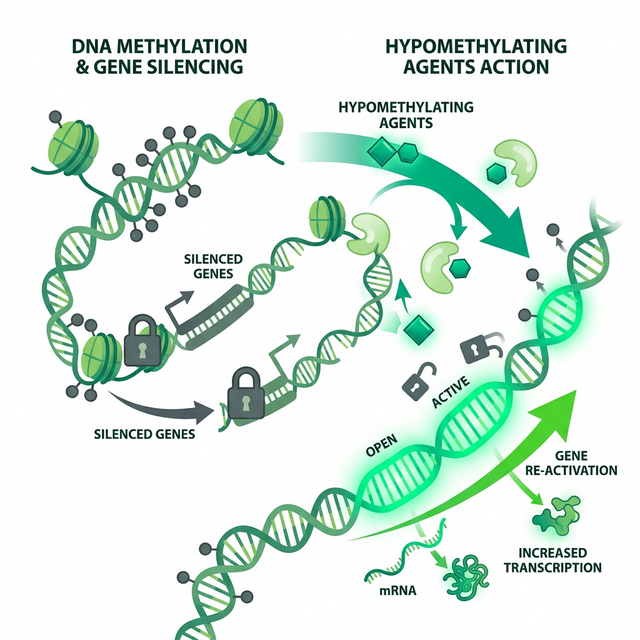
These are epigenetic therapies — they don't damage DNA directly but instead change how genes are read. In leukemia cells, important tumor-suppressor genes are often silenced by excess methyl groups attached to the DNA (a process called hypermethylation). HMAs remove these chemical tags, effectively "turning back on" the genes that help cells mature and die normally. They are often preferred for older patients or those who cannot tolerate intensive chemotherapy.
How It Works
Imagine genes as light switches that have been glued in the "off" position by methyl groups. HMAs dissolve the glue, allowing the switches to flip back on. The re-activated genes instruct the cell to mature or self-destruct, restoring normal blood cell production.
Key Drugs in This Class
Azacitidine (Vidaza)
Given as a subcutaneous injection, typically on a 7-day cycle every 28 days. The standard HMA for MDS and AML. Often paired with Venetoclax for a powerful combination.
Decitabine (Dacogen)
An IV infusion given over a 5-day cycle. Works through same mechanism as Azacitidine. An oral version (ASTX727 / Inqovi) combines Decitabine with Cedazuridine for at-home dosing.
What to Expect: HMA therapy is generally outpatient — you visit the clinic for your injections and go home the same day. You may need monthly cycles for 4-6 months before seeing full response. Many patients continue HMA therapy indefinitely as maintenance.
Immunotherapy
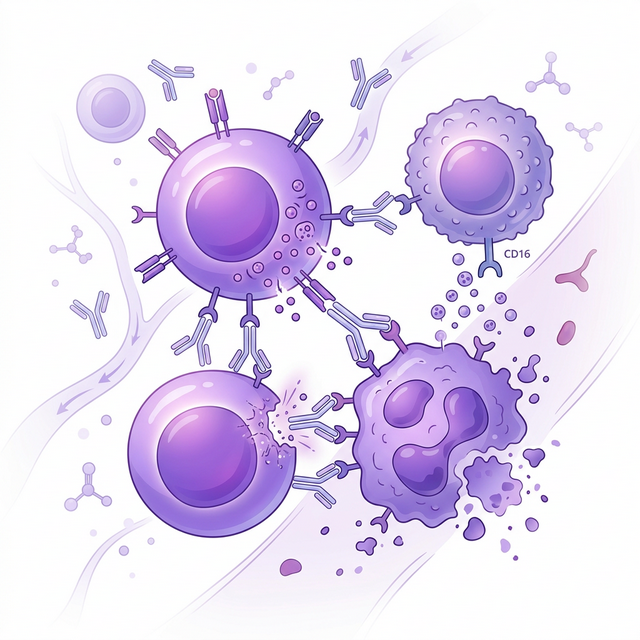
Rather than attacking cancer cells directly, immunotherapy empowers your own immune system to recognize and destroy them. Cancer cells often evade immune detection by hiding or mimicking normal cells. Immunotherapy drugs can strip away this disguise, flag cancer cells for destruction, or directly connect immune cells to cancer cells like a biological bridge. This category includes antibody-drug conjugates (ADCs), bispecific T-cell engagers (BiTEs), and CAR-T therapy.
How It Works
Immunotherapies use engineered antibodies or modified cells. Some carry toxic payloads directly to cancer cells (ADCs). Others physically link a T-cell to a cancer cell (BiTEs), forcing the immune cell to attack. CAR-T goes further by permanently engineering T-cells (see our Treatments page for details).
Key Drugs in This Class
Gemtuzumab Ozogamicin (Mylotarg)
An antibody-drug conjugate (ADC) targeting CD33 on AML cells. The antibody delivers a cell-killing toxin directly inside the cancer cell.
Blinatumomab (Blincyto)
A BiTE antibody for B-cell ALL. It simultaneously binds a T-cell and a cancer cell, creating a physical bridge that triggers immune-mediated killing.
Ibrutinib (Imbruvica)
A BTK inhibitor for CLL that blocks signaling in malignant B-cells. Transforms CLL treatment by allowing long-term oral therapy without traditional chemotherapy.
The Future: Immunotherapy is the fastest-growing area of leukemia research. New BiTE antibodies, CAR-T products, and checkpoint inhibitors are in clinical trials. Ask your doctor about.
Common Drugs & Their Roles
| Drug Name | Class | Primary Use |
|---|---|---|
| Cytarabine (Ara-C) | Chemotherapy | Standard for AML (7+3), ALL, and Lymphoma |
| Daunorubicin / Idarubicin | Anthracycline | Induction for AML and ALL |
| Venetoclax | BCL-2 Inhibitor | AML, CLL (Often with HMA) |
| Azacitidine / Decitabine | HMA | MDS, AML |
| Imatinib (Gleevec) | TKI | CML (1st Gen), Ph+ ALL |
| Dasatinib (Sprycel) | TKI | CML, ALL (2nd Gen) |
| Nilotinib (Tasigna) | TKI | CML (2nd Gen) |
| Ponatinib (Iclusig) | TKI | Refractory CML/ALL (3rd Gen) |
| Midostaurin (Rydapt) | FLT3 Inhibitor | Newly diagnosed FLT3+ AML |
| Gilteritinib (Xospata) | FLT3 Inhibitor | Relapsed/Refractory FLT3+ AML |
| Ruxolitinib (Jakafi) | JAK Inhibitor | MPNs (MF, PV), Graft-vs-Host Disease |
| Blinatumomab (Blincyto) | BiTE (Immunotherapy) | B-cell ALL |
| Ibrutinib (Imbruvica) | BTK Inhibitor | CLL, MCL |
| Rituximab (Rituxan) | Anti-CD20 Antibody | B-cell NHL (DLBCL, FL, MCL), CLL |
| Obinutuzumab (Gazyva) | Anti-CD20 Antibody | FL, CLL (glycoengineered, stronger ADCC) |
| Brentuximab Vedotin (Adcetris) | Anti-CD30 ADC | Hodgkin HL, ALCL, CD30+ PTCLs |
| Polatuzumab Vedotin (Polivy) | Anti-CD79b ADC | DLBCL (Pola-R-CHP first-line, relapsed) |
| Tazemetostat (Tazverik) | EZH2 Inhibitor | Relapsed FL (EZH2-mutated preferred) |
| Glofitamab (Columvi) | Bispecific Ab (CD20×CD3) | Relapsed/Refractory DLBCL |
🔬 Molecular Profiling is Key
Many of these drugs only work if your leukemia cells have specific genetic markers. This is why is performed at the time of diagnosis.
🎗️ Lymphoma-Specific Medications
Lymphomas are treated with a distinct set of targeted agents, antibody-drug conjugates (ADCs), and bispecific antibodies. Many of these drugs are specific to lymphoma biology and are separate from the leukemia medications covered above.
Anti-CD20 Antibodies (Rituximab, Obinutuzumab)
Anti-CD20 monoclonal antibodies are the backbone of B-cell lymphoma and CLL therapy. Rituximab (Rituxan) was the first-ever FDA-approved monoclonal antibody for cancer (1997). Obinutuzumab (Gazyva) is glycoengineered for stronger antibody-dependent cytotoxicity (ADCC) and is preferred in some FL and CLL patients.
Brentuximab Vedotin (Adcetris) — Anti-CD30 ADC
An antibody-drug conjugate (ADC) that delivers the cytotoxin MMAE to CD30-expressing tumor cells. FDA-approved for Hodgkin Lymphoma (BV-AVD first-line; single agent relapsed) and CD30+ PTCLs (BV-CHP first-line). CD30 is expressed on Reed-Sternberg cells and on ALCL/AITL cells.
Polatuzumab Vedotin (Polivy) — Anti-CD79b ADC
An ADC targeting CD79b (part of the B-cell receptor complex) on DLBCL cells. The POLARIX trial showed Pola-R-CHP significantly improves PFS vs R-CHOP in IPI ≥2 DLBCL. FDA-approved in combination with rituximab and bendamustine for relapsed/refractory DLBCL and as Pola-R-CHP for newly diagnosed DLBCL with higher IPI.
BTK Inhibitors for Lymphoma — Cross-reference
BTK inhibitors (ibrutinib, acalabrutinib, zanubrutinib) are covered in the Targeted Therapy section above. In lymphoma, they are used primarily for Mantle Cell Lymphoma(relapsed; increasingly used frontline) and for Waldenström macroglobulinemia. Pirtobrutinib (non-covalent BTKi) addresses resistance to the covalent BTKis.
Tazemetostat (Tazverik) — EZH2 Inhibitor
The first-in-class EZH2 histone methyltransferase inhibitor. FDA-approved for relapsed/refractory follicular lymphoma. EZH2 gain-of-function mutations (Y646 hotspot) occur in ~20–25% of FL and predict higher response rates (~70% ORR) vs EZH2 wild-type (~34% ORR). A once-daily oral pill with a favorable tolerability profile.
Bispecific T-Cell Engagers — Glofitamab, Epcoritamab, Mosunetuzumab
A transformative new class of "off-the-shelf" antibodies that simultaneously bind CD20 on lymphoma cells and CD3 on T-cells, redirecting cytotoxic T-cells to kill cancer. FDA-approved for relapsed/refractory DLBCL and FL. Major advantage over CAR T: no need for cell collection and manufacturing; available to any patient immediately. Cytokine release syndrome (CRS) management is important, especially with the first doses.