
ℹ️ What is Smoldering Multiple Myeloma (SMM)?
💊 Primary Treatment Approaches
🔬 Understanding Smoldering Myeloma
Smoldering Multiple Myeloma sits between MGUS and active myeloma on the plasma cell disorder spectrum. Like MGUS, SMM does not cause organ damage — but unlike MGUS, the abnormal plasma cell burden is significantly higher, and the risk of progression is much greater, especially in the first 5 years.
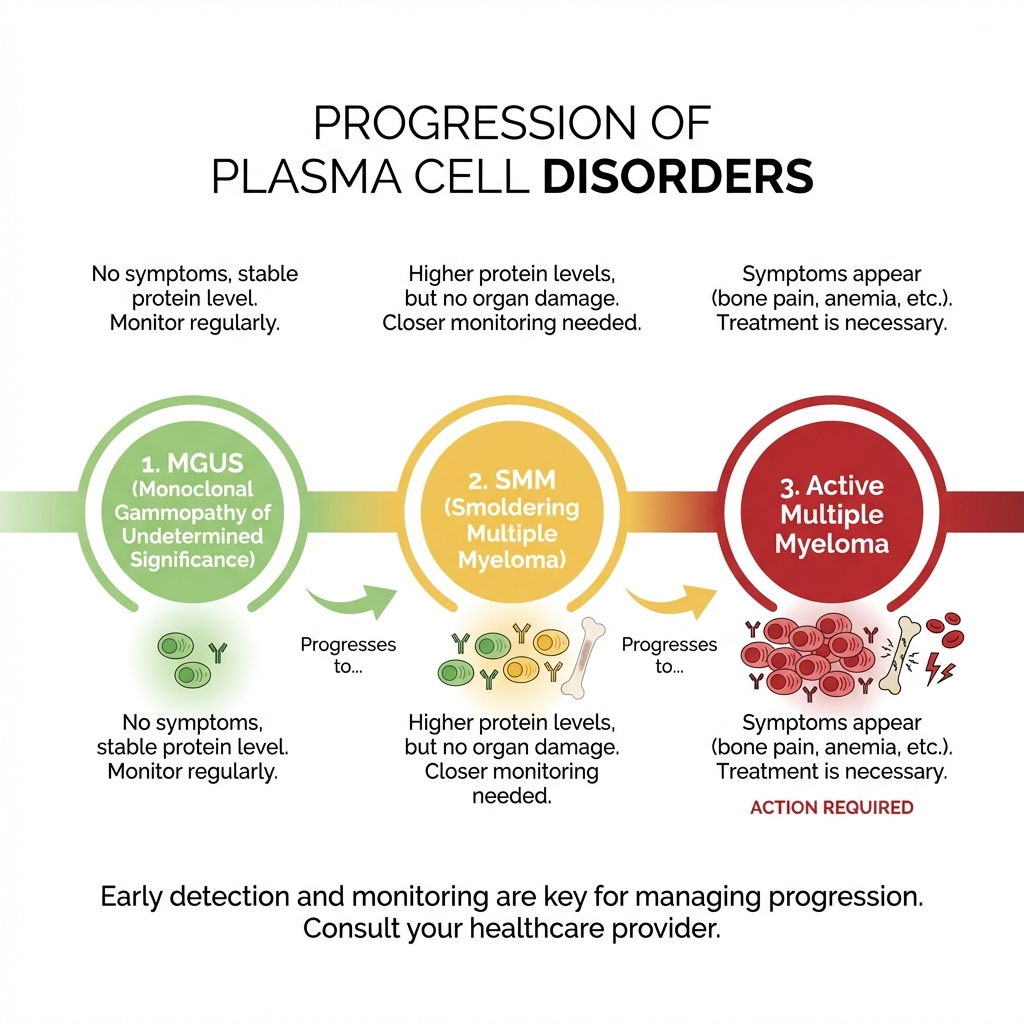
Figure 1: The spectrum of plasma cell disorders. SMM is a middle stage between pre-malignant MGUS and active Multiple Myeloma.
📊 Diagnostic Criteria
SMM requires either of:
- • Serum M-protein ≥3 g/dL
- • Bone marrow plasma cells 10-59%
- • Urine M-protein ≥500 mg/24hr
AND: No myeloma-defining events (no CRAB, no biomarkers of malignancy)
📈 Progression Risk
- • ~10% per year for the first 5 years
- • ~3% per year for years 5-10
- • ~1% per year after 10 years
- • ~50% progress within 5 years — much higher than MGUS
- • High-risk SMM: can progress in months
📊 Risk Stratification — Who Will Progress?
Not all SMM is equal. Identifying high-risk SMM — patients likely to progress within 2 years — is critical because early intervention may improve outcomescompared to waiting for organ damage.
🔬 The Mayo 20/2/20 Model
Three risk factors, each worth 1 point:
- • Bone marrow plasma cells ≥20%
- • Serum M-protein ≥2 g/dL
- • Free light chain ratio ≥20 (involved/uninvolved)
| Risk | Factors | 2yr Progression |
|---|---|---|
| Low | 0 factors | ~10% |
| Intermediate | 1 factor | ~26% |
| High | 2-3 factors | ~47-81% |
🧬 Genomic Risk Features
- • t(4;14), t(14;16), del(17p) — high-risk cytogenetics even in SMM
- • Circulating tumor cells in blood — strong predictor of early progression
- • Evolving M-protein — progressive increase over serial measurements
- • MYC rearrangements — associated with rapid progression
- • Whole-body MRI / PET-CT — focal lesions may reclassify as active myeloma
💊 The Early Treatment Debate
One of the most active debates in myeloma: should high-risk SMM patients receive early treatment before organ damage occurs?
✅ Evidence FOR Early Treatment
- • QuiRedex trial: lenalidomide + dexamethasone in high-risk SMM delayed progression (median not reached vs 23 months) and showed overall survival benefit
- • ECOG E3A06: single-agent lenalidomide delayed progression in intermediate/high-risk SMM
- • Preventing irreversible organ damage (renal failure, bone fractures)
- • Earlier intervention when tumor burden is low and clone is less complex
⚠️ Arguments for Observation
- • Not all SMM progresses — some patients remain stable for decades
- • Treatment side effects in patients who may not need it
- • Risk of developing drug-resistant clones before needed
- • NCCN guidelines currently recommend observation with consideration of clinical trial enrollment for high-risk SMM
🔮 Current Practice & Emerging Data
The field is actively evolving. The AQUILA trial (daratumumab in high-risk SMM) and ITHACA trial (isatuximab-based) are testing whether modern immunotherapy can safely intercept progression. Many expert centers now offer treatment on clinical trials for high-risk SMM. Close monitoring every 3-4 months remains standard for all other SMM patients, with treatment initiated at progression to active myeloma (CRAB or myeloma-defining events).
🔄 The Precursor Spectrum
MGUS
M-protein <3 g/dL
Plasma cells <10%
~1%/yr progression
SMM
M-protein ≥3 g/dL
Plasma cells 10-59%
~10%/yr (5yr)
Active MM
CRAB criteria or
Myeloma-defining events
Treatment required
Not all patients progress along this spectrum. Most MGUS patients never develop myeloma.
📚 SMM Resources
🛠️ Tools & Focused Research
Scientific Literature
Search thousands of PubMed articles curated for Smoldering Myeloma.
Clinical Trials
Explore actively recruiting clinical trials for this disease group.
View Clinical Trials